Mental Health Nurse Guide
Mental Health Nurse Guide (2025): Roles, Skills, Education & Career Path
- Introduction
A mental health nurse (MHN) is a licensed registered nurse (RN) who offers specialized care for individuals with mental distress. They create care plans and offer ongoing support to mental illness patients in both community centers and hospitals. The demand for MHNs in 2025 is high due to;
- Modern-day challenges
- People understand the importance of mental health
Nonetheless, the roles of an MHN are less complex than those of Psychiatric Mental Health Nurses, who have more in-depth know-how. The role of an NP-level Mental Health Nurse or Psychiatric Mental Health Nurse Practitioner (PMHNP) is even more complex, as their expertise and knowledge are more demanding.
This paper illuminates the definition of a mental health nurse, their practice, how to be one, and how that compares to the practice of psychiatric nurses and PMH-NPs. Employment opportunities in healthcare, communities, and digital platforms, as well as salary levels and the future job market, are also highlighted.
As you look to join your ideal nursing school to pursue the mental health nurse career, finding the best nursing school should be a priority. However, to join such a school, you need to pass the entry exams to prove you are competent enough. Testavia offers you resources such as practice tests, case-based scenarios, and videos to help you prepare for these entry exams and even NCLEX exams. Visit the website for a chance to study at a top institution and become a decorated MHN.
- What Is a Mental Health Nurse?
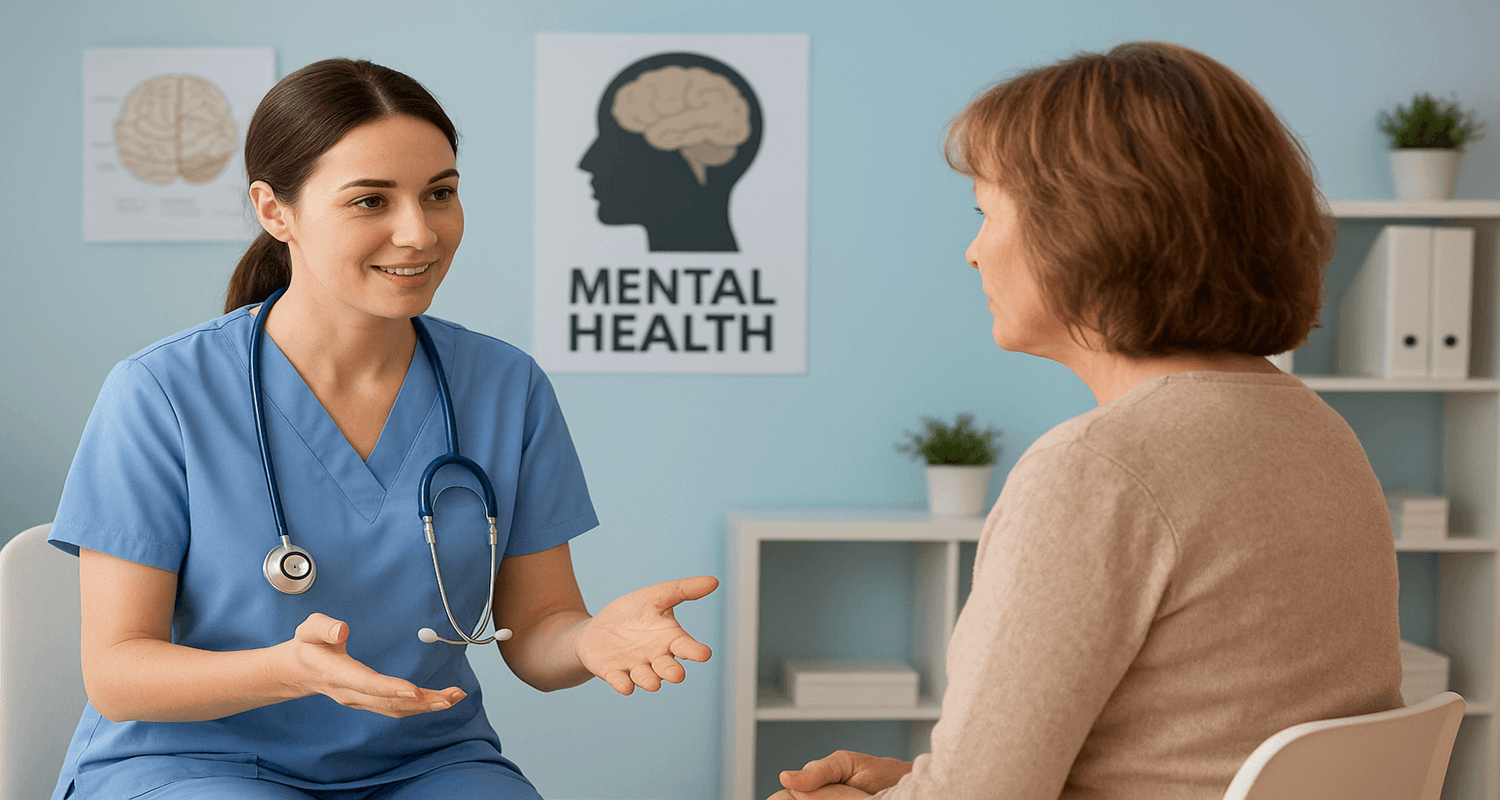
A Mental Health Nurse operates in the psychological support section to help clients cope with anxiety, depressive moods, negative behaviors, and any other related concerns, either in community care or mental health settings.
An MHN is distinct from an RN, who works in healthcare, treating various illnesses, but not specifically in the mental health sector. MHN's focus is on providing services such as counseling and social support to those in need.
Key Competencies:
- Therapeutic and effective communication
- Empathy
- Assessment
- Crisis intervention
- Confidentiality
- Ethical conduct
- Interprofessional teamwork
MHNs need to calm those in distress during therapy and communicate effectively while also showing empathy. They also need to assess the patients' well-being to understand their condition and behavior, as well as the potential effects of their condition on them.
They must also protect patient details from unauthorized persons to maintain confidentiality and respect the values, standards, and guidelines of ethical conduct.
Mental health nurses also work hand in hand with other healthcare workers, including Psychiatric Mental Health Nurses, whose scope of knowledge includes programs in psychiatric nursing.
- Where Mental Health Nurses Work
Licensed RNs in the mental health sector can earn a living by offering support in a variety of places:
- Healthcare institutions - supporting patients with general illnesses or psychiatric conditions.
- Emergency departments- such as those affiliated with the Red Cross.
- Community centers - in academic institutions, homes for people in need, and rehabilitation centers.
- Digital spaces - where they offer tele-mental health and digital counselling, through help hotlines or mental health applications and websites.
- Correctional centers - for mental health support and behavioral modification for those in jail.
- Key Skills & Responsibilities
- Core Responsibilities:
- Evaluationand documentation - to understand how patients feel, act, and their state of well-being, they must evaluate and keep records of these and other essential details.
- Administering medications - helping those with mental health needs adhere to medication, and understanding revolutions as treatment progresses.
- Education and support - the responsibilities of MHNs are holistic as they include education for patients and support for families.
- Interprofessional collaboration - or teamwork with other professionals in the field, such as social healthcare providers and PMHNPs.
- Essential Skills:
- Active listening and empathy - psychological support depends on good listening skills to understand patients without judgment or bias. Effective psychological and mental health care also requires showing empathy.
- Cultural sensitivity – the skill is necessary to recognize the cultural issues in play and respect the viewpoints of their clients.
- Trauma-informed care - where nurses are aware of the various traumas that patients have experienced and show sensitivity towards them.
- Boundaries and emotional control – they are crucial for workers to maintain their sanity and well-being. They must also practice emotional control to interact professionally despite the rising tensions and emotions.
- Education & Pathway to Becoming a Mental Health Nurse
MHN Pathway:
- A degree in nursing is the first step in this field. Students start by completing an Associate Degree in Nursing (ADN) or a Bachelor of Science in Nursing (BSN) program in a higher learning institution.
- From there, you have to sit for the NCLEX exam and meet the required threshold to become a licensed registered nurse (RN).
- You then have to gain clinical experience as a registered nurse in a mental health setting for about one or two years. You can even enroll in a Graduate Nurse Program for support and training.
PMHNP Pathway:
- Students can enroll in specialized coursework in psychiatry or behavioral nursing after the working experience, to become a Psychiatric Mental Health Nurse. The coursework can be either postgraduate studies, such as diplomas, certificates, or short specialization courses.
- The American Psychiatric Nurses Association (APNA) and American Nurses Credentialing Center (ANCC) programs are optional extensions.
- Pass the final examination and become a certified and licensed PMHNP.
- You can also consider further advancements, such as Master's or doctoral programs after becoming a PMHNP. PMHNP programs have a broader scope and clinical exploration of mental health, enabling those who advance to have more intricate roles, including making diagnoses and prescribing treatments.
- Mental Health Nurse vs Psychiatric Mental Health Nurse
Mental health nurses are Registered Nurses working in mental health sectors to gain experience in mental health or psychology, while a psychiatric mental nurse works with patients in psychiatric units and deals with severe disorders, as they have the expertise via special training for their work settings.
Psychiatric mental health nurses are MHNs who advance further through specialization in mental health or Psychiatry, hence a broader knowledge than mental health nurses.
A PMHNP has a higher level of education and expertise, as they undergo master's or doctoral training in the field of work and therefore have more clinical roles, such as diagnosis and determination of adequate medical treatment for patients, compared to other healthcare professionals.
- Mental Health Nurse Practitioner Pathway
- Acquiring a degree in nursing is the first step to becoming a mental health nurse practitioner (PMHNP).
- Step two entails getting a license to practice and attaining registration as a nurse by passing the NCLEX exam.
- Then you get some experience practicing as a registered nurse serving mental health clients.
- From there, you need to complete a Master of Science in Nursing (MSN) or a Doctor of Nursing Practice (DNP), majoring in psychiatric-mental health nursing.
- Then, undertake American Nurses Credentialing Center and Psychiatric-Mental Health Nurse Practitioner (PMHNP) certifications and pass to get official recognition as a professional in this capacity, which is mandatory.
Scope of work: It comprises isolating and ascertaining specific ailments, suggesting treatments for the exact ailments, and incorporating therapeutic mediations as the pinpointed diagnosis and prescription.
Demand, Job Outlook, and Settings:
A higher requirement for nurse-led behavioral clinics and digital therapy exists as more people know and seem to care about their mental health. Jobs in hospital setups, addiction and substance abuse recovery centers, in schools, or even online are therefore on the rise to address the demand for mental and psychological support.
- Salary & Job Outlook
An RN can earn as low as $ 66,000, but with more experience, the pay can rise to as high as $135,000. According to the U.S Bureau of Labor Statistics, there will be a 5% increase in registered nurses’ employment rate by the year 2034.
More people with mental health issues are coming forward for treatment and support, and online sites for support are also increasing in comparison to past years.
With a PMHNP having a higher aggregate compensation due to their larger capacity for practice in psychology and mental health, the expertise in this field is promising.
- Self-Care & Burnout Prevention for Mental Health Nurses
Company support:
- Friendly and supportive workplaces – employers ought to offer these professionals the necessary benefits and strategies to make their work easier.
Self-care:
- Seeking help - especially in cases where they can benefit from colleagues’ help or even need therapy.
- Emotional aid - where MHNs articulate their feelings and reflect on happenings, either by journaling or support groups.
- Body movement - such as exercises is also beneficial in managing overwhelming feelings and thoughts.
- Boundaries – these are quite important to the workers as they create a balance between personal needs and work, allowing for recharge, relaxation, and preventing burnout.
- Conclusion
Mental health nursing is essential, as the search for mental well-being and psychological support is significantly higher in current times than in previous years. The specialty is also growing rapidly as the employment opportunities and even online work platforms increase.
At the same time, professionals must stay current with the latest trends in treatment and service provision. They must also develop their stress-coping mechanisms and seek emotional help as needed.
Are you ready to become a mental health nurse? Visit Testavia for mental health nursing study aids, clinical basics, and NCLEX practice tests to equip you with the requisite skills for your exams and nursing career.